
Summer 2025
Summer 2025
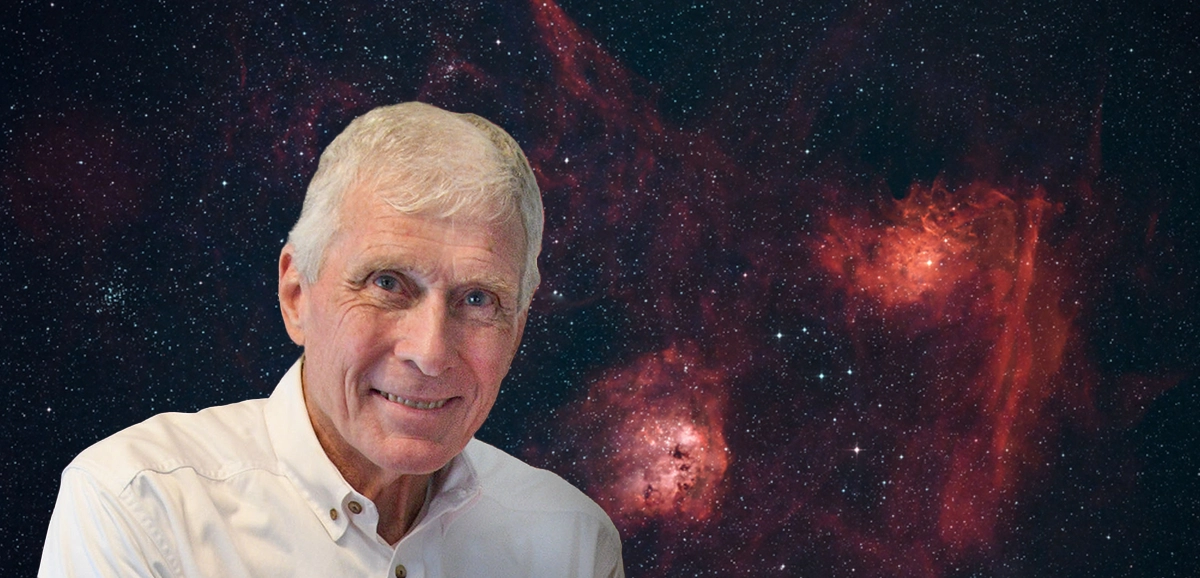
Lee Smith is a retired US Air Force officer, fighter pilot and airline captain. He was born and raised in Houston, Texas. After graduating from Aldine High School in 1967, he earned a Bachelor of Science in Aerospace Engineering from the University of Texas in 1971. He received his commission as a second lieutenant through Air the Force Officer Training School in February 1972.
After completing Air Force Navigator Training, he was assigned to the F-4 Phantom as a Weapons System Operator, serving tours at Udorn Royal Thai Air Force Base, Thailand, and Royal Air Force (RAF) Bentwaters, UK.
In September 1976, Lee entered pilot training at Reese AFB, Lubbock, Texas. Upon graduation, he was assigned to the A-10 Warthog, where he spent the remainder of his AF career.
His A-10 assignments included:
•Myrtle Beach AFB, SC, where he was a squadron weapons instructor;
•Nellis AFB, NV, where he was an instructor at the USAF Fighter Weapons School, and;
•RAF Bentwaters, UK, commanding the 92 Tactical Fighter Squadron (TFS), and serving as Commander of the 81Tactical Fighter Wing , Detachment 1, Incirlik Air Base, Turkey during Operation Provide Comfort, an operation to support Kurdish resistance to Saddam Hussein during the first Gulf conflict.
After relinquishing command of the 92TFS, Colonel Smith was assigned to the Air Force Operational Test and Evaluation Command, Kirtland, AFB, NM, where he retired in 1994.
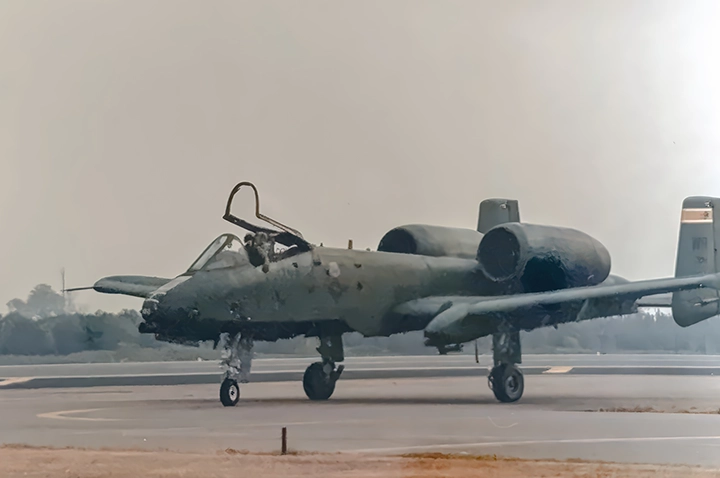
Lt. Col. Lee Smith returns from a flight in his A-10.
After retirement from the Air Force, Lee was employed as a pilot for Southwest Airlines, retiring in 2014 after 42 years as a professional pilot. Lee has over 18,000 flying hours, over 3100 in jet fighters, with 200 hours of combat time.
Lee is married to the former Jill Stimson of Austin, a retired elementary school teacher and librarian. Together, they have five children, nine grandchildren, and one great-grandchild. They reside in Lexington, Texas.
Lee and Jill are active members of the Brazos Valley Astronomy Club, where he currently serves as the Treasurer.
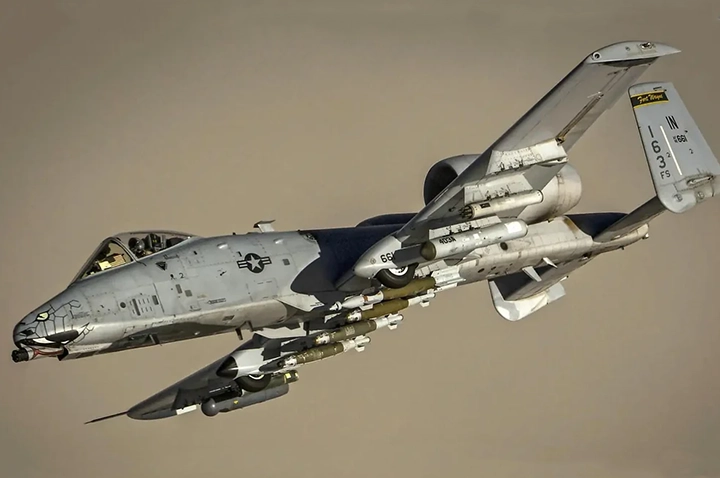
A-10 Warthog Image USAF
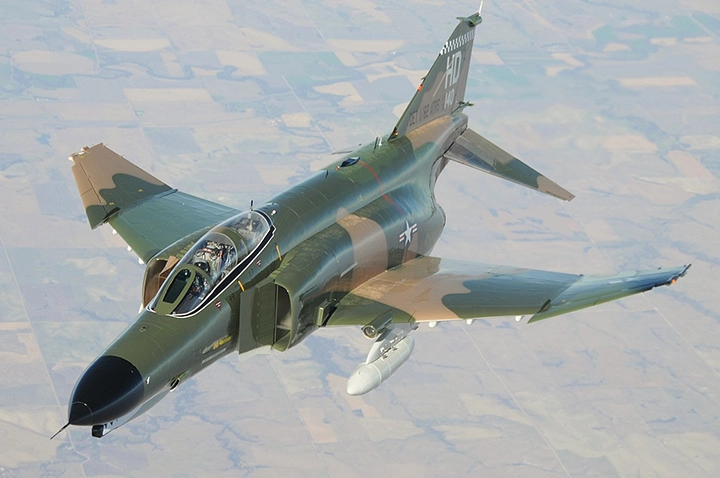
F-4 Phantom Image USAF
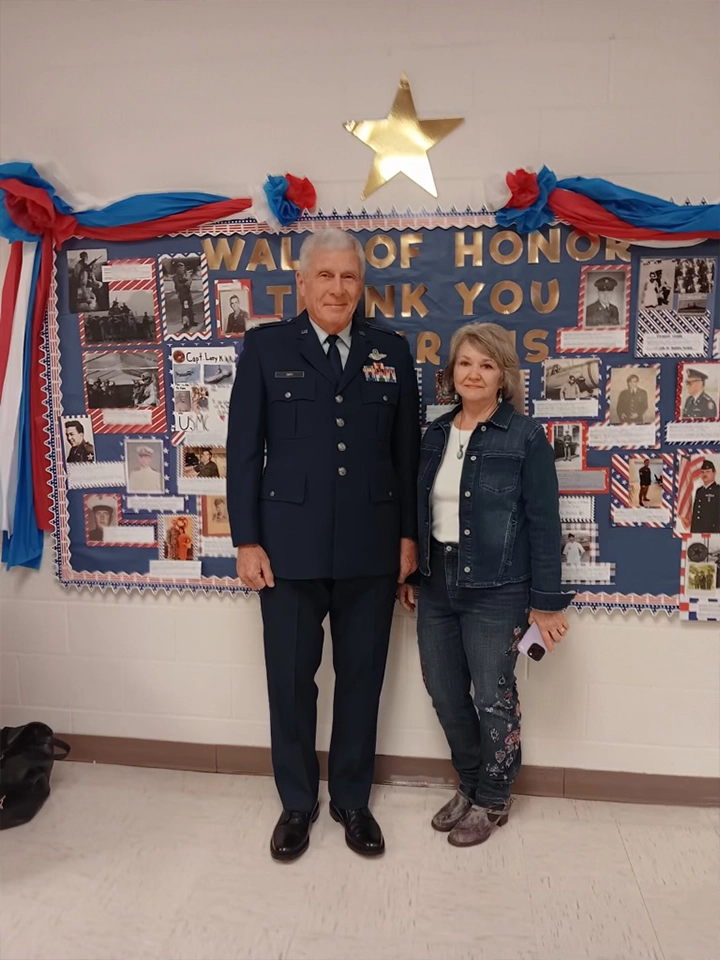
Lieutenant Colonel Lee Smith and his wife, Jill
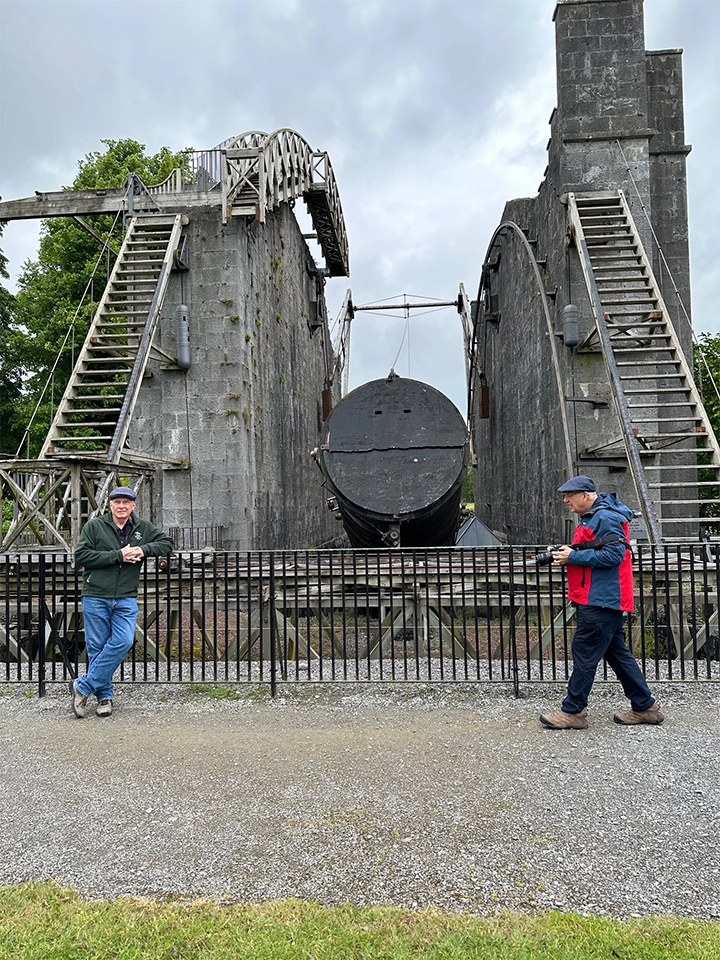
Lee stands beside The Great Telescope, also known as The Leviathan of Parsonstown, at Birr Castle in Ireland
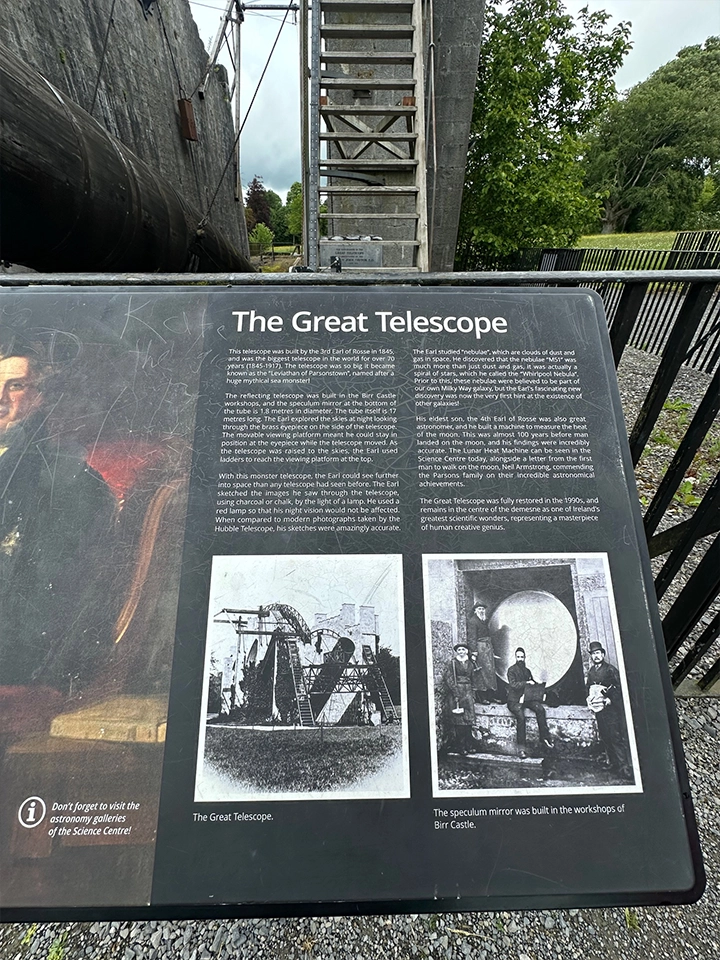
A plaque describes the six foot telescope that was the largest telescope in the world from 1845 until 1917.
How did you become interested in astronomy?
My undergraduate degree is in orbital mechanics, specifically, our solar system. I’ve always been interested in manned space flight and was looking forward to being a part of manned missions to Mars, but the Mars program never materialized.
In 2020, my horse shoer (farrier), Dan Carver, suggested we buy telescopes and join BVAC. In January 2021, during the COVID-19 pandemic, Dan and I took a solar system astronomy class online via Zoom at Austin Community College.
How long have you been involved with the hobby?
In late spring 2021, the BVAC needed a place to meet in person, so I offered my barn, and we all met here. Even the horses in the stalls were in attendance! During that meeting, it was suggested that the observatory dome, which had been donated to the club, be put here on my property in Lexington, Texas, because of the remote location and dark skies.
With club members Dan Carver, Warren Bracewell, and friend Eben Jones (Jonsey), we poured a 4000-pound concrete pier. (KUDOS to Warren Bracewell for continuously pouring concrete for three hours without a break to keep it flowing.) A local carpenter, Charles Hall, and I built the building to support the dome. Club members Dr. Mark Spearman, Dr. Randall Light, Warren Bracewell, Dan Carver, and Jonsey came out to help install the dome. Then, Warren Bracewell helped wire it for power. We completed the project on August 29, 2021.
What type of equipment do you currently use for observations?
With help from club member Randy Light, I began to upgrade my equipment from a basic 4-inch AltAz. Randy helped me learn to climb the three mountains of astrophotography: planning, capture, and processing the images.
My equipment consists of an Astrophysics Mach 2 equatorial mount with absolute encoders, an AstroTech Ritchey Chretien (RC) 10" reflector telescope, 300 mm and 600 mm Nikon prime lenses, and a Nikon D810A astrophotography DSLR.
Describe a typical night of observing.
• Open the dome.
• Check polar alignment.
• Calibrate the guide scope.
• Focus the camera/telescope.
• Using a planetarium program (Dell computer), choose the target, plate solve, and recalibrate the mount.
• Take test images using Backyard Nikon to determine proper exposure.
• Start guiding using PHD 2.
• Take required images.
• Livestack using Pixinsight.
• Repeat as objects are available to photograph.
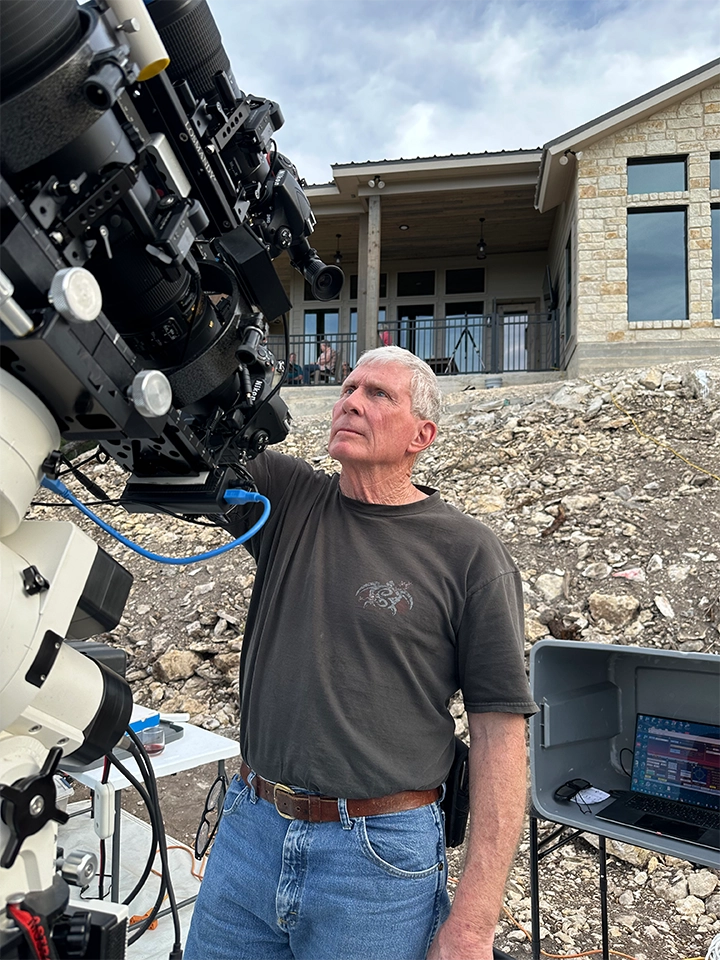
Lee is setting up his Mach 2 equatorial mount and 600 mm Nikon f4 lens with a Nikon D810A camera in preparation for the total solar eclipse in Concan, TX.
Do you have a favorite part of the sky and a favorite time of the year to observe? Why?
Nebula season (September/October to March)is my favorite because I love to photograph Nebulae.
Click each image below to see a larger image.
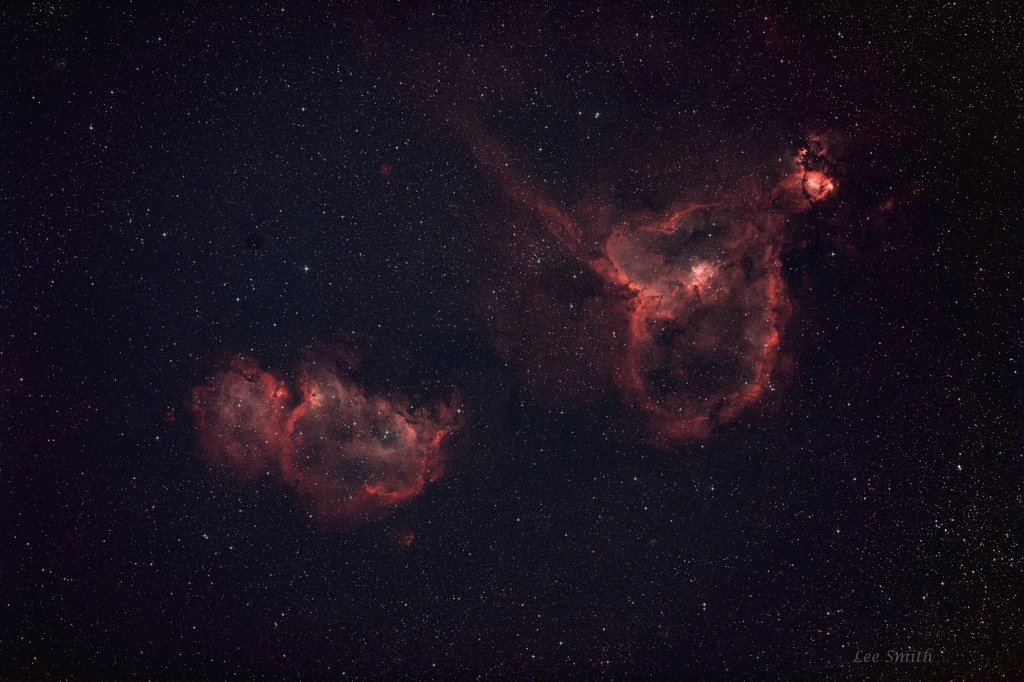
Heart and Soul Nebulae © Lee Smith
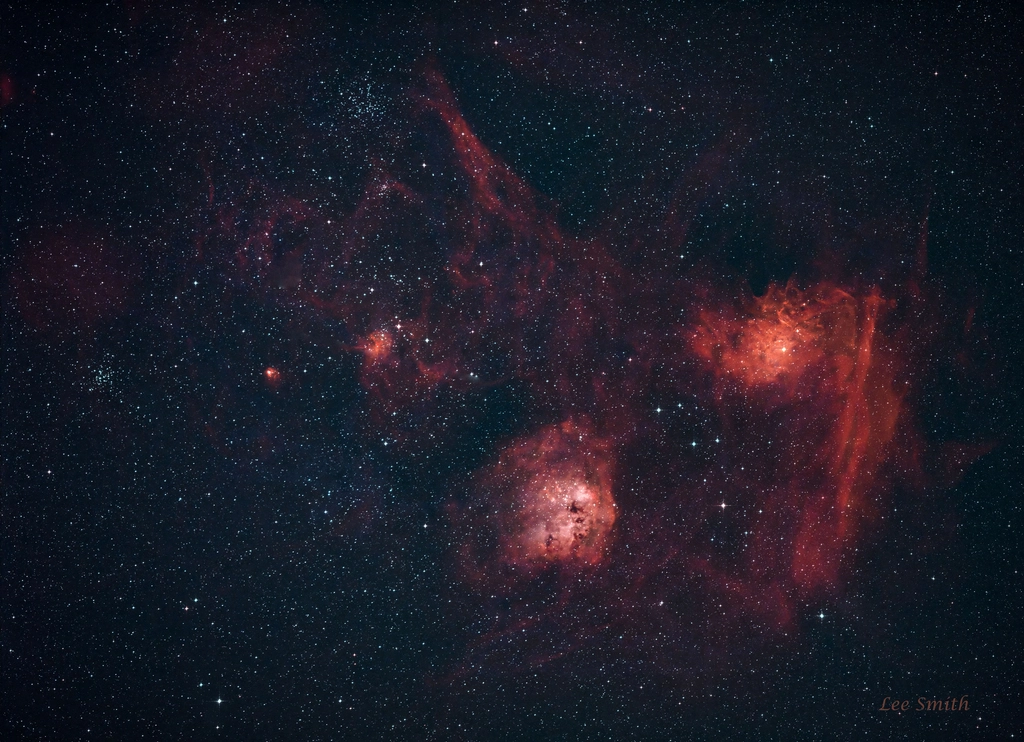
Flaming Star Nebula © Lee Smith
What is the most awe-inspiring object you have seen with or without your telescope?
The Milky Way is the most awe-inspiring object to observe with the naked eye and cameras. My favorite is the image Jill and I captured during our visit to the North Rim of the Grand Canyon. It is particularly significant now that the North Rim has suffered devastating fires, including the destruction of the historic Grand Canyon Lodge, where our image was captured.
What has been your favorite astronomical event you have seen with or without your telescope?
The Milky Way is the most awe-inspiring object to observe with the naked eye and cameras, especially over the Grand Canyon, especially now that the North Rim of the Grand Canyon has been devastated by fire.
What is your favorite astronomical event?
The October 2023 annular eclipse was a particular favorite.
What gives you the most satisfaction with your hobby?
It is enormously satisfying to start seeing the color image begin to emerge during capture and livestack. Also, my favorite star parties are the more private ones conducted by our club members at Dr. Spearman’s observatory, the observatory in Lexington, and at the El Dorado X Bar Ranch.
Do you have any parting comments?
After joining the BVAC, my interest and enthusiasm for astronomy and astrophotography were launched. All of this was made possible by the help and support of the stellar members of the club!
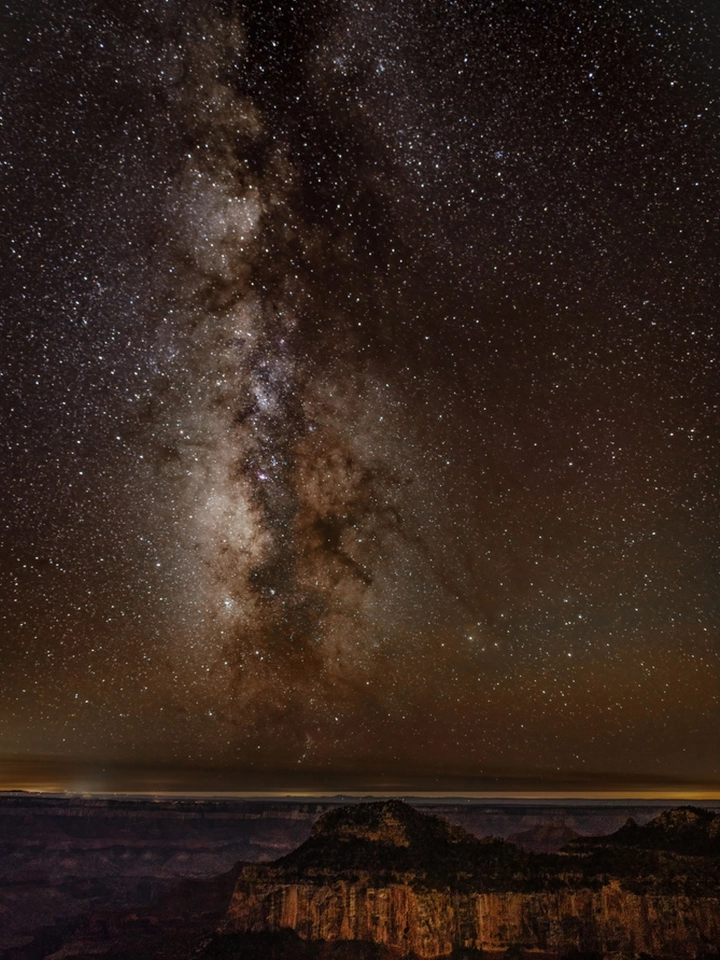
Lee's most awe-inspiring image is the one he and his wife, Jill, took of the
Milky Way over the Grand Canyon before the devastating fires at the North Rim.

FIND US ON THE WEB:
www.brazosvalleyastronomyclub.org
© Brazos Valley Astronomy Club
Newsletter Editor: Ginger Wentrcek
MEMBERSHIP QUESTIONS:
brazosvalleyac@gmail.com
Treasurer - Lee Smith