
In preparation for the 2024 total solar eclipse, Randall Light, M.D. presented a program to the members of the Brazos Valley Astronomy Club and the Bryan Noon Rotary Club during their respective February meetings. His comprehensive presentation included the following topics:
This is an excellent source for detailed instructions for photographing the solar eclipse. There are images of camera settings to capture the start of the eclipse, totality, and the very end of this rare event. Do you want to put your images together to make a sequential image of the phases? Dr. Light tells you how to prepare your images in Photoshop to do just that!
If you just want to go outside and enjoy the eclipse without taking photos, you can discover the interesting phenomena to see during the partial phase of the eclipse. And, for those who are not familiar with the two events that must happen at the same time to cause a solar eclipse, there are diagrams to illustrate how the sun, moon, and earth produce this astronomical event. There's something for everyone.
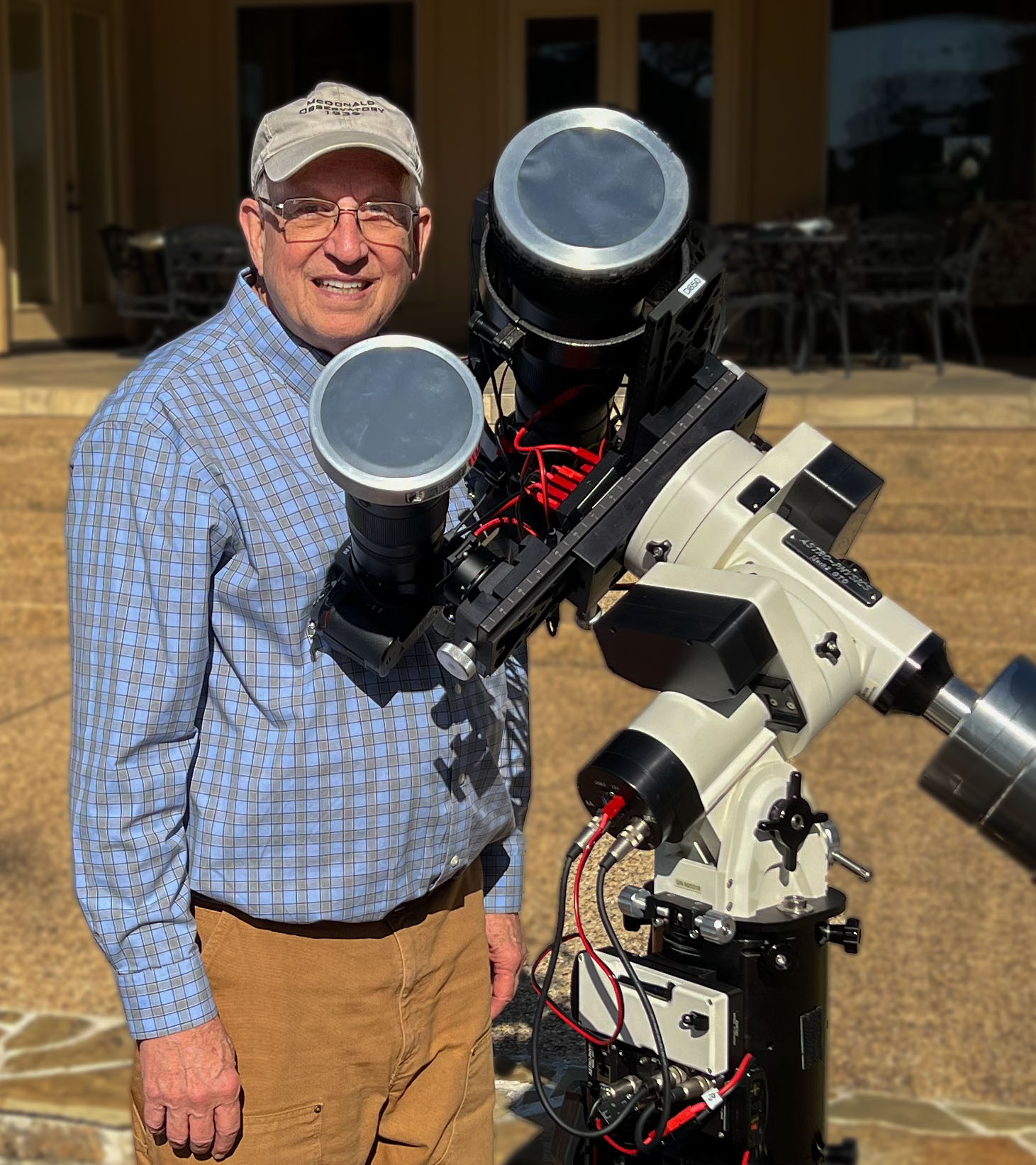
Dr. Randall Light's solar eclipse equipment includes a Nikon D850, 600mm lens, Nikon Z8, 180-600mm lens, SolarLite filters on an AP Mach2.
Dr. Light is a retired medical neurologist who became a photographer in 1979 and an astrophotographer in 2013 when he retired. He has written articles, given talks, and received awards for his astrophotography.
Website:
https://RandallLight.com

Winter 2024 Newsletter

CONTACT EMAIL:
contact@brazosvalleyastronomyclub.org
Coordinator - Randy Light, M.D.
PROGRAM REQUEST EMAIL:
outreach@brazosvalleyastronomyclub.org
Coordinator - Tom Campbell
GOOGLE DISCUSSION GROUP:
https://groups.google.com
Coordinator - Randy Light, M.D.
WEBSITE AND NEWSLETTER EMAIL:
webmaster@brazosvalleyastronomyclub.org
Coordinator - Ginger Wentrcek

Follow Us on Facebook

Member: Astronomical League

Member: Night Sky Network
BVAC Website:
https://brazosvalleyastronomyclub.org
© Brazos Valley Astronomy Club
The Brazos Valley Astronomy Club is a non-profit group
located in Bryan-College Station, Texas.
Our goal is to promote astronomy and related science
as a hobby for people of all ages.