
Spring 2024
Spring 2024
By David and Matthew Barry
We were hoping for the best when we made reservations to camp at Garner State Park to view both the annular eclipse in October 2023 and the total eclipse in April 2024. Texas State Parks called it “The Texas Two Step,” and we feel blessed to be part of that historic event and to see both in the same location.
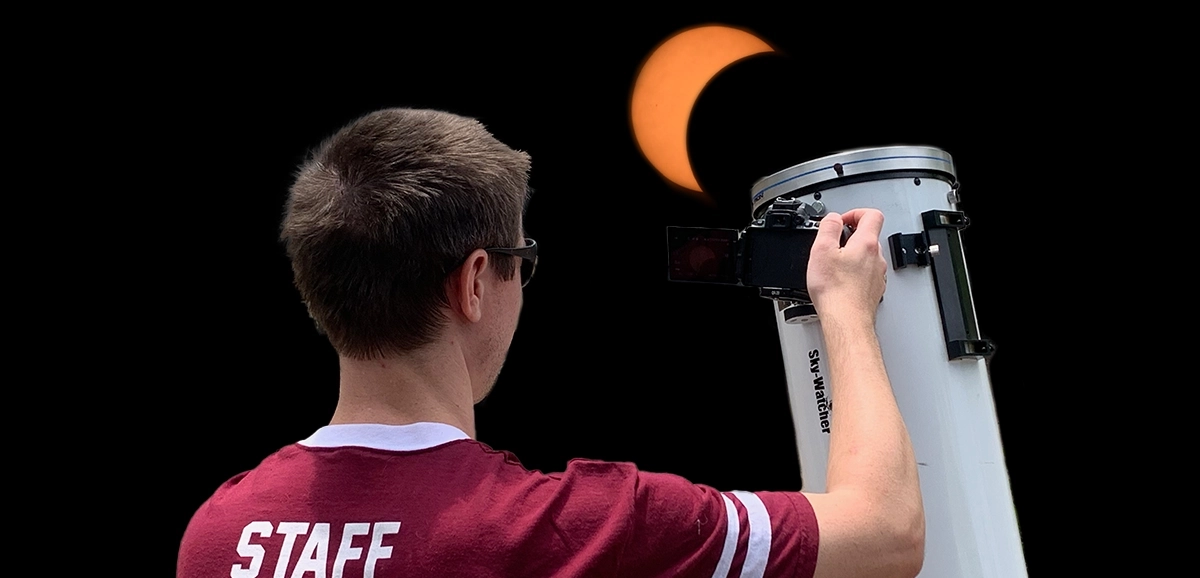
We used a fully manual 8-inch Dobsonian telescope with a solar filter and an attached 35mm DSLR camera for images. The sun would change its position in the sky while behind the clouds in between photos due to the Earth’s rotation. Without a tracking mount, it took a team effort: one of us would watch for the sun’s reappearing and disappearing through the clouds while Matthew would find and re-center the sun’s image in the telescope. This was sometimes difficult with the short window of opportunity during the sun’s reappearances.
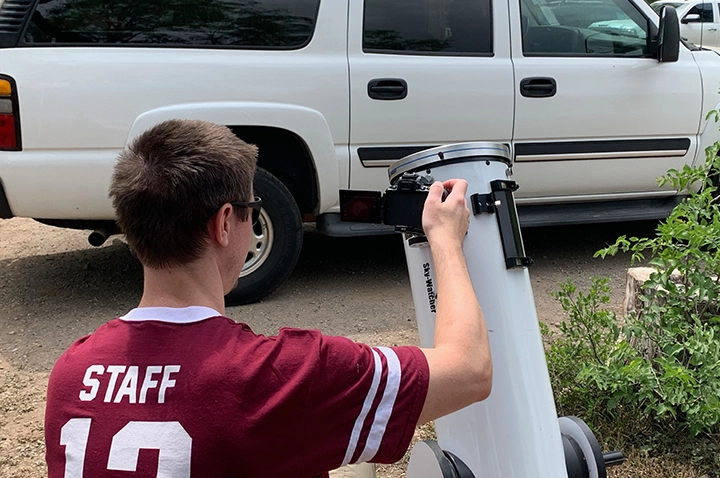
Matthew Barry guides his telescope and captures the partial eclipse on his camera.
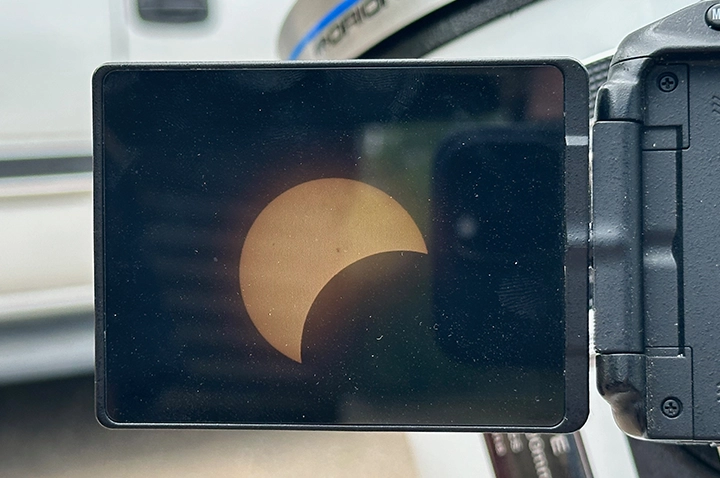
The partial solar eclipse phase is visible on a camera screen.
In each event, we had to deal with cloud cover. The annular eclipse in October was only partly cloudy and not nearly as challenging as the total eclipse. The cloud cover on April 8, 2024, was probably about 95% or more, with both high-level and low-level clouds. Getting enough clearing at both levels to get occasional photos was nerve-wracking at times. When the clouds cleared only partially, we resorted to using long exposures on low sensitivity to piece together pictures of the eclipsing sun.
At totality, it was an answer to prayer that the total eclipse became completely visible for a short time, about 10 to 20 seconds. I was thanking and praising God aloud for showering His favor on us. In answer to all the prior week’s prayers, we could see and witness the total eclipse in all its glory. I could also hear many exclamations in the distance throughout Garner State Park when the total eclipse image became visible. So many people shouting in awe simultaneously from so many different directions was remarkable. We also witnessed a 360-degree sunset, with light visible on the horizon all around us.
When the totality began to wane and the light got brighter, the birds started to sing again, breaking the silence of darkness as if a new day had begun.
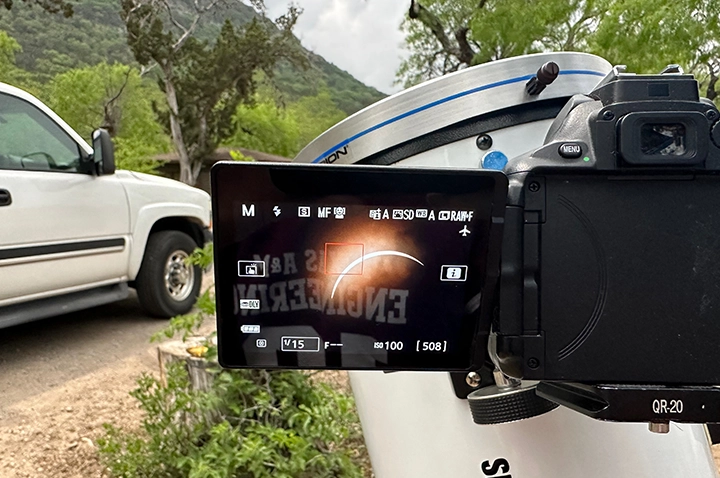
Camera settings and Diamond Ring
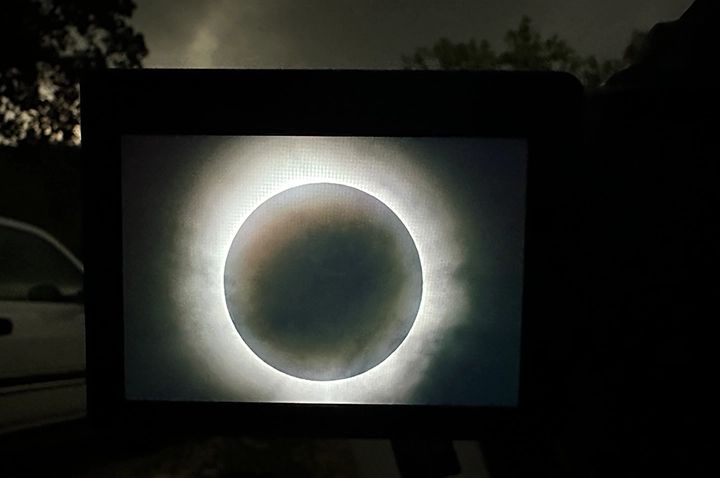
Total eclipse - notice dark background
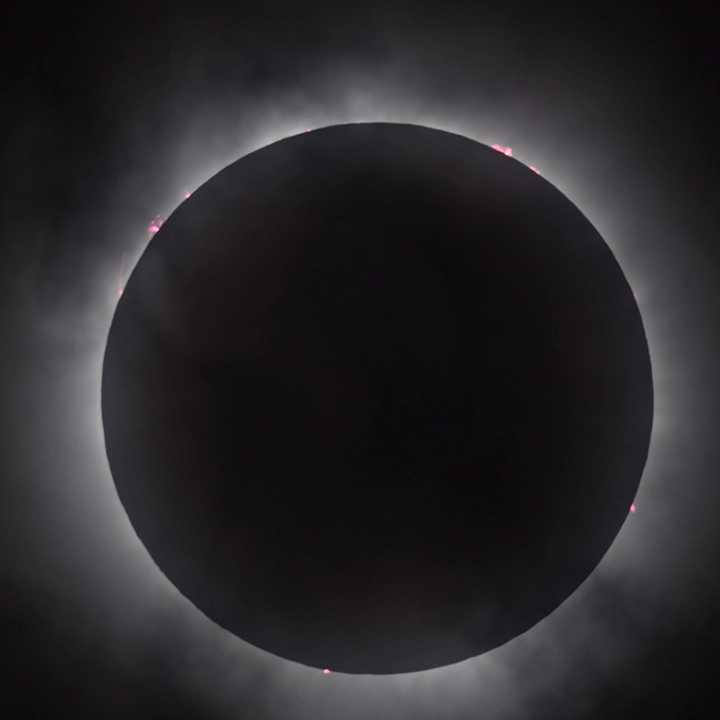
The clouds cleared for approximately 10 to 20 seconds and we were fortunate to get this image of the eclipse in totality with prominences and the corona.
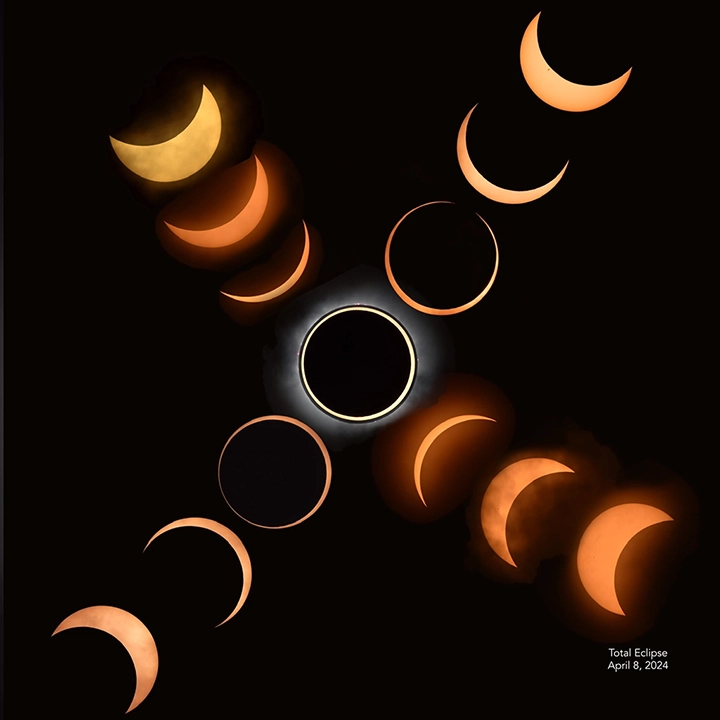
Overlap of annular solar eclipse and total solar eclipse

About the Author: David Barry
David Barry is a retired USPS Letter Carrier, married with four children, one grandchild. He has been a lifelong musician and enjoys both performing and composing. David has been a BVAC member since 2016.

About the Author: Matthew Barry
Matthew has a BS in Computer Science and Applied Mathematics and an MCS in Cybersecurity and Data Forensics. He is a developer and Co-Sysadmin at Texas A&M Center for Applied Technology under Texas A&M Engineering Experiment Station, an avid lover of SeaWorld and all things dolphin and orca related, a volunteer liturgical minister at St. Mary’s Catholic Center, a tenor in the Brazos Valley Schola Cantorum, secretary in the Bryan Amateur Radio Club and Terry Scholar Alumni Association, Bryan/College Station Chapter, and an instrument rated - Part 107 UAS pilot.
His other hobbies include programming, 3D printing, calligraphy, fountain pens, astronomy, photography, camping, hiking, swimming, gardening, mechanical keyboards, board games, and video games.

FIND US ON THE WEB:
www.brazosvalleyastronomyclub.org
© Brazos Valley Astronomy Club
Newsletter Editor: Ginger Wentrcek
MEMBERSHIP QUESTIONS:
brazosvalleyac@gmail.com
Treasurer - Lee Smith